The Evening That Changed the Tone
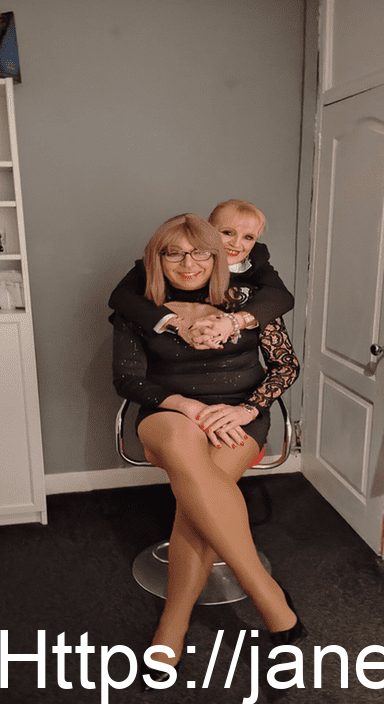
Just after getting to know Emma, the next disaster in my life arrived right on cue. I’ll save the full drama for another chapter, but for now, let’s say I ended up in a hospital bed. Again. My life has always had a flair for the dramatic, and apparently, it wasn’t done with me yet.
When I finally got out, Emma started visiting me at home. Still in male mode then, but showing up for me all the same. And it helped more than she ever realised. I was alone in that house, recovering, restless, and bored in the way that has never been good for me — the kind of boredom where old shadows start whispering, and the walls feel too close.
Emma filled the silence with warmth. We talked about everything: clothes, makeup, the tiny rituals of becoming ourselves, the things we wanted, the things we feared. Those visits kept me tethered to my sanity while my body tried to remember how to be strong again. She didn’t fuss, she didn’t hover — she was there, and sometimes that’s the only medicine that works.
As we grew closer, as the air between us softened into something honest, I finally asked the question that had been humming beneath every conversation: When do I get to see the real Emma? She told me we’d do it when I was well enough. So we set a date. January. Suddenly, I had something to recover towards, not just away from.
The week leading up to that day dragged on like a year. Every hour felt stretched thin with anticipation. I kept imagining how she might look, how she might move, how she might breathe in her own skin. I wondered if she was imagining me imagining her. I wondered if she was afraid. I wondered if I was.
But eventually, Saturday evening arrived. It would be just the three of us: me, my little puppy, and Emma — the version of her I needed to see.
She was nervous, of course. Worried that the Emma I carried in my mind wouldn’t match the one standing in front of me. But she had nothing to fear. When she came downstairs, she looked exactly as I had imagined — exactly as she was meant to. Her worry vanished the moment I told her she looked really good. I meant it. She felt it.
I had set the scene in my room for her arrival. I always set the scene — it’s part instinct, part ritual, part claiming of space. She would sit beside me on the sofa, close enough for the truth of her to settle between us. My little puppy would kneel at my side on the floor where he belonged, grounding the moment with his quiet devotion.
And Emma — she was exactly where she needed to be, too. Right next to me. We had grown so close over our time together that the moment felt inevitable, natural, right. And of course, I was the one in control of everything from that point on. I always have been. I’ve always been the centre of gravity, and this was no different. This was my domain — the place where I am at my best.
But even in my domain, I gave Emma space. Enough room to breathe, to settle, to be herself beside me. Because power isn’t about crowding someone, it’s about knowing exactly how much space to hold open for them.
From the moment she sat beside me, the whole room shifted. Not loudly, not dramatically — but with that quiet, unmistakable click of something falling perfectly into place. She sat there, nervous but trying not to show it, and I could feel the weight of what this moment meant for her. For both of us.
I didn’t rush anything. I never do. Control isn’t about force; it’s about presence. And in that room — my room, my domain — I held the centre without even trying. Emma felt it. My puppy felt it. The air itself felt it.
Emma kept glancing at me, searching my face for any sign of disappointment, any crack in the image she feared she couldn’t live up to. But I wasn’t looking for flaws. I was looking at her — the real her — and she was exactly right, exactly as she should be. Exactly as I had known she would be.
I let her settle. I gave her space to breathe, to exist beside me without pressure. But make no mistake: the gravity in that room belonged to me. It always has. I’ve spent my whole life being the one who sets the tone, who holds the room, who becomes the point everything else orbits around. And that night was no different.
But Emma didn’t shrink from it. She didn’t run from the intensity or the closeness. She leaned into it — slowly, cautiously, but willingly. And that told me everything I needed to know.
The evening unfolded gently after that — no rush, no performance, just two people who had grown close enough that the silence between them felt like a conversation of its own. My puppy stayed at my side, grounding the moment with his quiet loyalty, while Emma and I sat shoulder to shoulder, letting the reality of each other settle in.
And then, slowly, the connection deepened.
It wasn’t a dramatic shift. It wasn’t a confession or a grand gesture. It was quieter than that — more honest. Emma’s shoulders softened. Her breathing steadied. She leaned just a little closer, as if drawn by a gravity she didn’t fully understand yet. I felt her letting herself be seen, not the version she thought she had to be, but the version she truly was.
“I didn’t know if I’d be enough,” she said softly.
Not dramatic. Not rehearsed. Just honest.
I turned to her and let her see the full weight of my attention — not the polite version, not the softened version, but the real thing.
“You are exactly who you’re meant to be,” I told her. “And exactly who I expected.”
Her breath caught. I saw it. I felt it.
That was the moment the connection deepened — not because of what I said, but because she believed me.
She exhaled, long and trembling, and her whole body relaxed beside mine. She wasn’t performing anymore. She wasn’t hiding. She was simply Emma — real, present, brave enough to sit in her truth.
We talked then — not about clothes or makeup or the surface-level things we’d used to fill the space during my recovery. We talked about the deeper things. The things that matter. The things you only share when you feel safe.
She told me what she feared.
I told her what I hoped.
She told me what she wanted.
I told her what I needed.
At one point, she reached out, hesitated, then let her hand rest lightly against mine. It wasn’t dramatic. It wasn’t romantic. It was simply human — a quiet offering of trust.
I didn’t pull away. I didn’t rush it. I turned my hand, so our fingers aligned, and let the moment settle.
It felt right.
It felt earned.
It felt like the beginning of something neither of us had language for yet.
The deeper connection didn’t arrive with fireworks.
It arrived with stillness.
With honesty.
With the courage to be seen.
And in that quiet, steady moment, I realised something:
For the first time in a very long time, I wasn’t holding the room alone.
Emma was holding it with me.
In the days that followed, something subtle but unmistakable changed between us. It wasn’t dramatic — no sudden declarations, no grand gestures — but the energy had shifted. It was in the way Emma spoke to me, the way she looked at me, the way she carried herself when she walked into a room. There was a new steadiness in her, a quiet confidence that hadn’t been there before.
And I felt it too.
I’ve always been the one who holds the centre, the one who sets the tone, the one people lean toward without quite knowing why. But after that night, Emma didn’t just lean toward me — she met me, not as someone seeking approval or reassurance, but as someone who had finally stepped into her own truth.
Our conversations deepened.
Our silences deepened.
Even the way we laughed together felt different — less guarded, more real.
She started opening up in ways she never had before. Not because I asked, but because she trusted me enough to let the walls drop. She told me things she’d never said out loud. Fears she’d carried for years. Hopes she’d never dared to voice. And I listened — not as a saviour, not as a judge, but as someone who understood the weight of becoming.
And in return, I found myself sharing more with her, too. Not everything — I never give everything — but enough. Enough for her to see the woman behind the presence, the softness behind the authority, the vulnerability behind the strength. She held it gently, without flinching, and that mattered more than she knew.
Our dynamic became a dance — not of power, but of understanding.
She learned when to lean into me.
I learned when to let her step forward.
She learned the rhythm of my presence.
I learned the shape of her courage.
She grew more confident in her own skin. More grounded. More herself. And I could see the shift in her posture, her voice, her choices. She wasn’t trying to match an image anymore. She was becoming the woman she had always been beneath the surface.
And I… I found myself softening in ways I hadn’t expected. Not losing control — never that — but allowing a gentler version of myself to exist in her presence. A version that didn’t need to hold every moment so tightly. A version that could let someone else share the weight.
Our dynamic evolved into something balanced, something steady, something quietly powerful. Not defined by roles or labels, but by the way we showed up for each other.
She trusted me.
I respected her.
She leaned into my presence.
I made space for hers.
She grew.
I allowed myself to be seen.
And somewhere in that slow, steady unfolding, we stopped being two people navigating separate storms and became something closer to a shared calm — a connection built not on intensity, but on truth.
It wasn’t love.
It wasn’t romance.
It wasn’t anything that needed a name.
It was simply us — evolving, deepening, becoming something neither of us had expected but both of us recognised when it arrived.